
Table of Contents
- What Is AI-Powered Paid Advertising?
- Why AI Is Transforming Paid Advertising
- The Rise of Marketing Automation in Paid Advertising
- How AI and Automation Work Together
- Predictive Marketing: The Next Evolution of Paid Advertising
- AI Advertising Trends Shaping the Future
- The Future of PPC Advertising
- Challenges Businesses Must Prepare For
- How Businesses Can Prepare for the AI Advertising Future
- Why AI, Automation, and Predictive Marketing Matter More Than Ever
- Conclusion
Artificial Intelligence (AI) is transforming the way businesses approach digital advertising. Traditional paid advertising relied heavily on manual targeting, keyword selection, bid management, and campaign optimization. Today, AI-powered advertising platforms are reshaping the industry by enabling businesses to automate decision-making, predict customer behavior, and achieve better results with less manual effort.
As competition increases across digital channels, companies that embrace AI-driven paid advertising gain a significant advantage in reaching the right audience, reducing advertising costs, and improving return on investment (ROI).
At Eaglelytics Digital, we help businesses leverage advanced AI marketing solutions, automation tools, and predictive analytics to maximize advertising performance and drive measurable growth.
This guide explores the future of paid advertising, the role of AI and automation, and how predictive marketing is helping businesses stay ahead in an increasingly competitive marketplace.
What Is AI-Powered Paid Advertising?
AI-powered paid advertising uses artificial intelligence, machine learning, and automation technologies to optimize advertising campaigns, analyze customer behavior, improve targeting, automate bidding, and increase conversions while reducing marketing costs.
Unlike traditional advertising methods, AI continuously analyzes vast amounts of data to identify patterns, predict outcomes, and make real-time decisions that improve campaign performance.
Modern AI advertising tools can:
- Identify high-converting audiences
- Predict purchasing behavior
- Optimize bidding strategies automatically
- Create personalized ad experiences
- Improve conversion rates
- Reduce wasted advertising spend
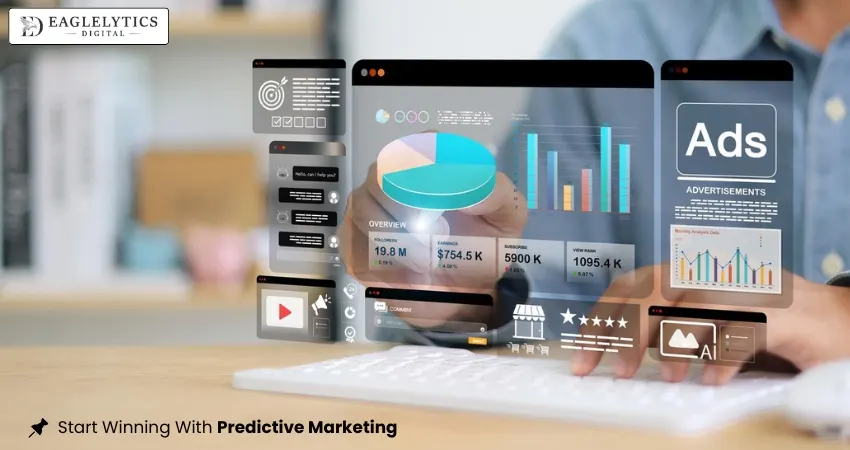
Why AI Is Transforming Paid Advertising
The digital advertising landscape has become increasingly complex. Consumers interact with brands through multiple devices, platforms, and touchpoints before making purchasing decisions.
Managing this level of complexity manually is nearly impossible.
AI helps businesses by:
Faster Decision-Making
AI processes millions of data points in seconds and identifies opportunities that marketers may miss.
Improved Audience Targeting
Machine learning algorithms analyze customer demographics, interests, behaviors, and engagement patterns to identify ideal prospects.
Better Budget Allocation
AI ensures advertising budgets are directed toward campaigns and audiences with the highest conversion potential.
Continuous Optimization
Unlike manual campaign management, AI continuously learns and improves campaign performance in real time.
The Rise of Marketing Automation in Paid Advertising
Marketing automation is becoming a cornerstone of modern advertising strategies.
What Is Marketing Automation?
Marketing automation uses software and AI technologies to automate repetitive marketing tasks, including:
- Ad scheduling
- Audience segmentation
- Lead nurturing
- Email follow-ups
- Bid management
- Conversion tracking
- Campaign reporting
Automation allows marketers to focus on strategy while technology handles execution and optimization.
How AI and Automation Work Together
AI and automation complement each other to create highly efficient advertising systems.
AI Provides Intelligence
AI identifies trends, predicts outcomes, and makes recommendations based on data analysis.
Automation Executes Actions
Automation tools implement AI recommendations automatically without human intervention.
For example:
AI may identify that a specific audience segment is generating higher conversion rates.
Automation software then:
- Increases bids
- Adjusts budgets
- Expands targeting
- Creates remarketing campaigns
All of this can happen automatically.
Predictive Marketing: The Next Evolution of Paid Advertising
Predictive marketing is rapidly becoming one of the most powerful digital marketing strategies.
Rather than reacting to customer actions, businesses can proactively anticipate customer needs and deliver personalized advertising experiences.
How Predictive Marketing Works
Predictive marketing relies on multiple data sources, including:
- Website interactions
- Search behavior
- Purchase history
- Social media engagement
- Email activity
- CRM data
- Customer demographics
AI analyzes these data points and identifies patterns that help predict:
- Which prospects are likely to convert
- When customers may purchase
- Which products customers may need next
- Which campaigns will generate the highest ROI
Benefits of Predictive Marketing
Higher Conversion Rates
Businesses can target customers when they are most likely to make purchasing decisions.
Reduced Advertising Waste
Marketing budgets focus on audiences with higher buying intent.
Improved Customer Experience
Consumers receive personalized advertisements that match their interests and needs.
Better Lead Quality
Sales teams receive more qualified leads with higher conversion potential.
Increased Customer Retention
Predictive insights help businesses engage customers before they become inactive.
AI Advertising Trends Shaping the Future
1. Smart Bidding and Automated Campaign Optimization
Platforms such as Google Ads and Microsoft Ads now use AI-powered bidding strategies.
Popular smart bidding models include:
- Target CPA
- Target ROAS
- Maximize Conversions
- Maximize Conversion Value
These systems automatically adjust bids based on real-time conversion probability.
Benefits include:
- Improved ROI
- Better conversion rates
- Lower acquisition costs
- Faster optimization
2. Hyper-Personalized Advertising
Consumers increasingly expect personalized experiences.
AI enables advertisers to create highly targeted campaigns based on:
- Browsing behavior
- Purchase history
- Interests
- Location
- Device usage
- Search intent
Personalized advertising improves engagement and drives higher conversion rates.
3. AI-Generated Ad Creatives
Generative AI is revolutionizing content creation.
Modern AI tools can generate:
- Ad copy
- Headlines
- Product descriptions
- Video scripts
- Display ad creatives
- Social media advertisements
Businesses can rapidly test multiple ad variations and identify winning creatives faster than ever before.
4. Predictive Audience Targeting
Instead of targeting broad demographic groups, AI identifies users most likely to convert.
This approach allows businesses to:
- Increase lead quality
- Improve campaign efficiency
- Lower advertising costs
- Maximize return on ad spend
Predictive audience targeting is becoming a major competitive advantage.
5. Voice Search Advertising
Voice search adoption continues to grow through:
- Smart speakers
- Mobile devices
- Voice assistants
Businesses must prepare their paid advertising strategies for conversational search queries.
Future PPC campaigns will increasingly target natural language searches and voice-based interactions.
6. AI-Powered Customer Journey Mapping
Modern consumers rarely convert after a single interaction.
AI helps businesses understand the complete customer journey by analyzing:
- Search behavior
- Website visits
- Social engagement
- Email interactions
- Ad clicks
This allows marketers to create more effective multi-touch advertising campaigns.
The Future of PPC Advertising
Pay-Per-Click (PPC) advertising is evolving rapidly through AI innovations.
Future PPC campaigns will become:
More Automated
Manual campaign management will continue decreasing as AI takes over optimization tasks.
More Predictive
Algorithms will anticipate user behavior before customers actively search.
More Personalized
Ads will adapt dynamically based on user preferences and intent signals.
More Data-Driven
Advanced analytics will improve decision-making and campaign performance.
Businesses that fail to embrace AI-driven PPC advertising risk falling behind competitors.
Challenges Businesses Must Prepare For
While AI offers enormous advantages, there are challenges that businesses should address.
Data Privacy Regulations
Advertising platforms must comply with evolving privacy laws.
Examples include:
- GDPR
- CCPA
- Data protection regulations
Businesses must balance personalization with consumer privacy.
AI Transparency
Marketers need visibility into how AI systems make decisions.
Understanding AI recommendations ensures advertising strategies remain aligned with business goals.
Human Oversight
AI is powerful but not perfect.
Successful businesses combine:
- Human creativity
- Strategic thinking
- AI automation
The best results come from collaboration between technology and experienced marketing professionals.
How Businesses Can Prepare for the AI Advertising Future
Organizations that want to remain competitive should begin adopting AI-focused strategies today.
Invest in First-Party Data
Collect valuable customer insights directly through:
- Websites
- CRM systems
- Email marketing
- Customer surveys
Leverage AI Advertising Platforms
Use platforms that support:
- Automated bidding
- Predictive analytics
- Smart targeting
- AI-generated insights
Focus on Customer Experience
AI should enhance customer experiences rather than simply automate processes.
Monitor Performance Metrics
Track key indicators such as:
- Cost per acquisition (CPA)
- Return on ad spend (ROAS)
- Customer lifetime value (CLV)
- Conversion rates
- Lead quality
Why AI, Automation, and Predictive Marketing Matter More Than Ever
The future of paid advertising is no longer about reaching the largest audience. It is about reaching the right audience at the right time with the right message.
AI, automation, and predictive marketing enable businesses to make smarter decisions, reduce wasted spending, and improve overall campaign performance.
Companies that embrace these technologies today will gain a competitive edge in customer acquisition, lead generation, and revenue growth.
As advertising platforms continue evolving, AI-powered strategies will become the standard rather than the exception.
Conclusion
The future of paid advertising is being shaped by artificial intelligence, automation, and predictive marketing. These technologies are transforming how businesses identify opportunities, engage customers, and optimize advertising investments.
From smart bidding and automated campaign management to predictive audience targeting and hyper-personalized advertising, AI is creating new possibilities for businesses of all sizes.
At Eaglelytics Digital, we help businesses leverage cutting-edge performance marketing strategies, PPC advertising solutions, AI-powered campaign management, and predictive marketing techniques to maximize growth and stay ahead of the competition.
Businesses that adapt to this new era of AI-driven advertising will be positioned to generate higher-quality leads, achieve better ROI, and build sustainable long-term success in the digital marketplace.

